Ndutu Calving Season: Where the Great Migration Begins in Tanzania
When people talk about the Great Migration, the conversation almost always ends up at the Mara River crossing. Crocodiles. Chaos. Television-worthy drama. And while those crossings deserve every bit of their fame, they’re only one chapter of a much bigger story. If you’ve only watched the migration along the river, you’ve skipped the opening act….
When people talk about the Great Migration, the conversation almost always ends up at the Mara River crossing. Crocodiles. Chaos. Television-worthy drama.
And while those crossings deserve every bit of their fame, they’re only one chapter of a much bigger story.
If you’ve only watched the migration along the river, you’ve skipped the opening act.
That opening act begins in Ndutu, where the next generation of migration takes its first breath.
Straddling the southern Serengeti ecosystem and the Ngorongoro Conservation Area, Ndutu transforms between January and March into one of the world’s greatest natural nurseries. This is where hundreds of thousands of wildebeest gather on the nutrient-rich short-grass plains, drawn by seasonal rains that produce the perfect grazing conditions for expectant mothers.
Simply put, it’s a season of births.
It’s a synchronised event on an astonishing scale.
Around half a million wildebeest calves are born within just a few weeks, with the peak often occurring in February. By giving birth almost simultaneously, the herd overwhelms predators in sheer numbers. Lions, hyenas, cheetahs and jackals simply cannot catch every vulnerable calf. It’s nature’s version of safety in numbers, refined over thousands of years.
Spend a morning in Ndutu during the calving season, and you’ll quickly realise migration isn’t defined by movement alone. It’s about beginnings.
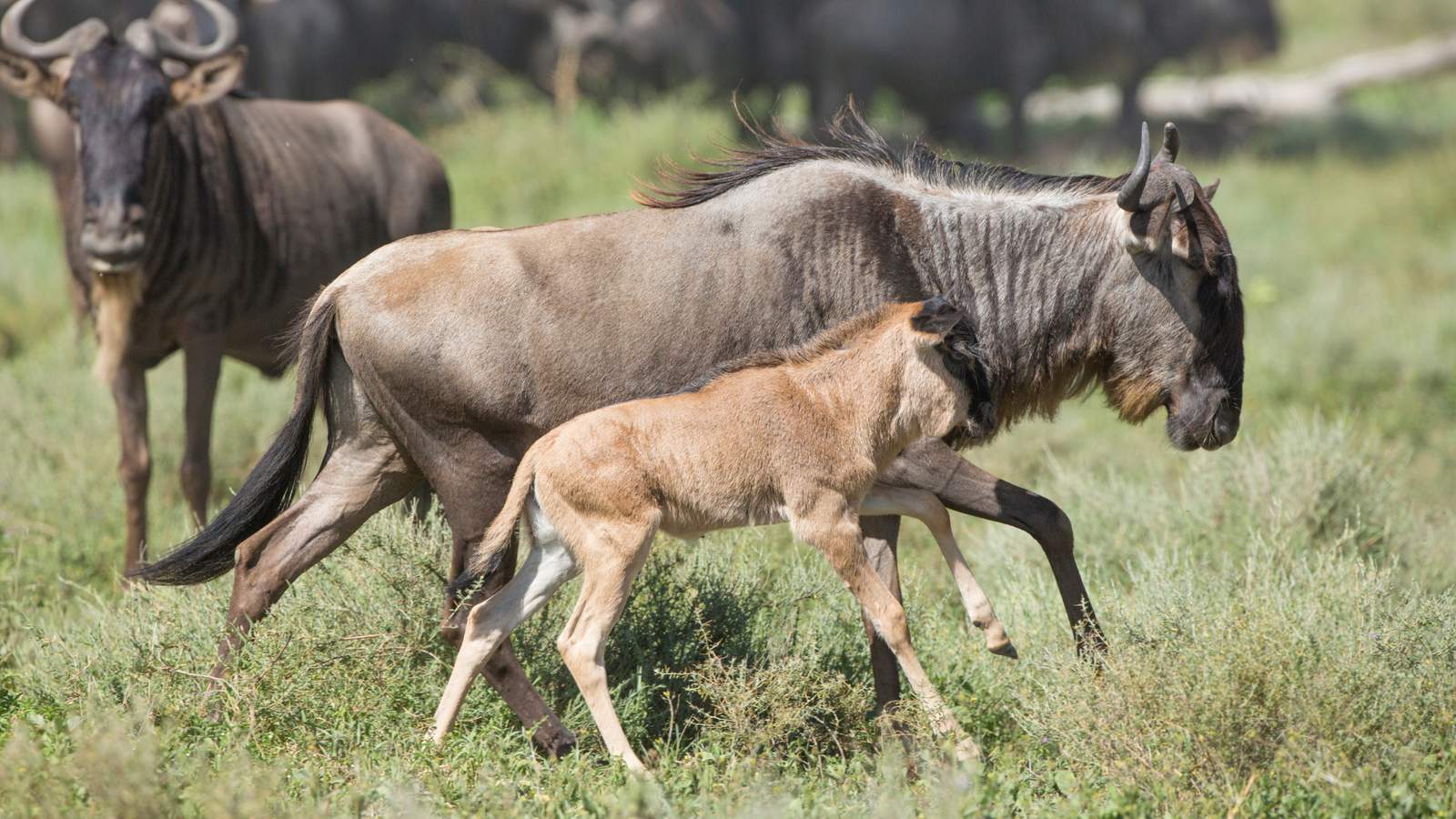
One moment, a newborn struggles to its feet on impossibly long legs. Minutes later, it’s already attempting an awkward jog beside its mother. It has to, because in Ndutu, hesitation is rarely rewarded.
Of course, predators know exactly what’s happening.
Lions patrol the plains. Cheetahs scan the horizon. Hyenas appear almost as if they’ve been reading the same calendar. For photographers and wildlife enthusiasts, it’s one of the most action-packed periods of the year. Yet somehow, it still lives in the shadow of the river crossings.
Perhaps that’s because the drama here feels different.
The Mara crossing is explosive. Ndutu is emotional.
Instead of asking, “Will they survive the river?” You find yourself wondering, “Will this tiny calf survive its first day?”
Then, almost as quietly as it began, the nursery empties.
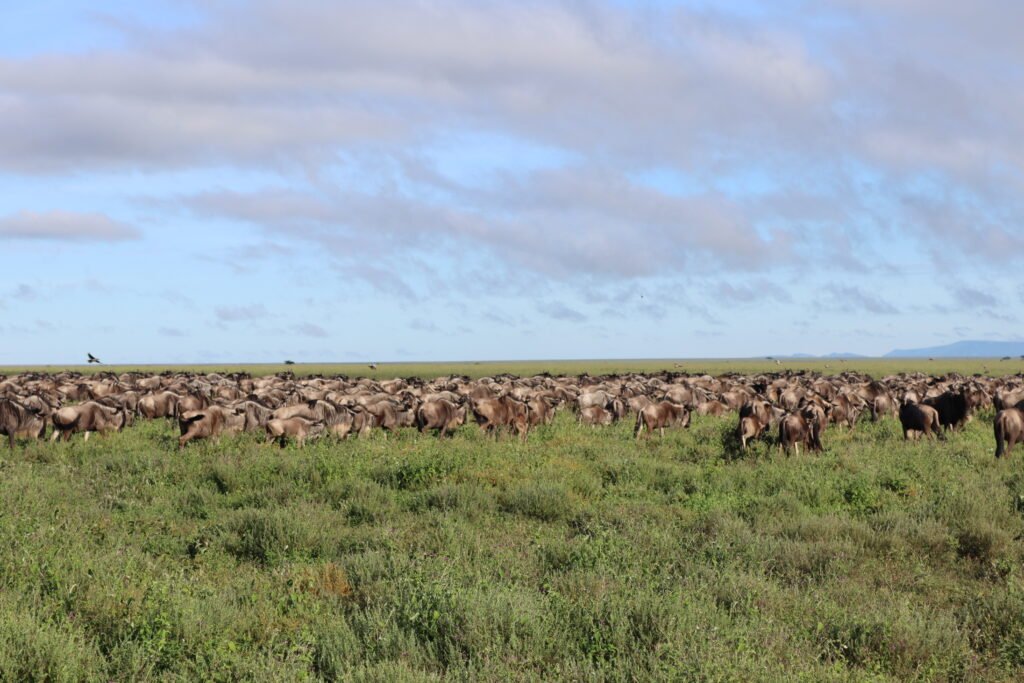
As the calves gain strength and the short-grass plains begin to dry, the enormous herds start moving north through the Serengeti, following the rains in search of fresh grazing. What begins as scattered family groups gradually becomes one of the most remarkable wildlife movements on Earth. Long columns of wildebeest, often stretching beyond the horizon, march in surprising order towards the next stage of their annual journey.
That’s why I’ve always felt Ndutu deserves far more attention than it gets.
The Great Migration doesn’t begin with a river crossing. It begins with new life.
Without Ndutu, there are no calves to brave the Grumeti, no youngsters to face the Mara, and no migration story to follow the following year.
The crossing may be nature’s blockbuster finale, but Ndutu is where the script is written.
So, if you’re planning to witness the Great Migration, don’t just chase the famous crossing.
Start where the story starts.
Go to Ndutu and watch the first chapter unfold.
Only then will you truly appreciate that the Great Migration isn’t a single spectacle. It’s a continuous cycle of life, survival and renewal, and nowhere captures that better than the quiet plains where every journey begins.