Wellness in Tanzania: Discovering Sound Healing in Dar es Salaam
“Our bodies are made of roughly 70% water. Allow yourself to feel and let the sound vibrations pass through your bodies,” Marian says softly, as I fiddle around trying to get comfortable on my mat. I am lying on a beach in Dar es Salaam, surrounded by singing bowls carefully arranged in front of us….
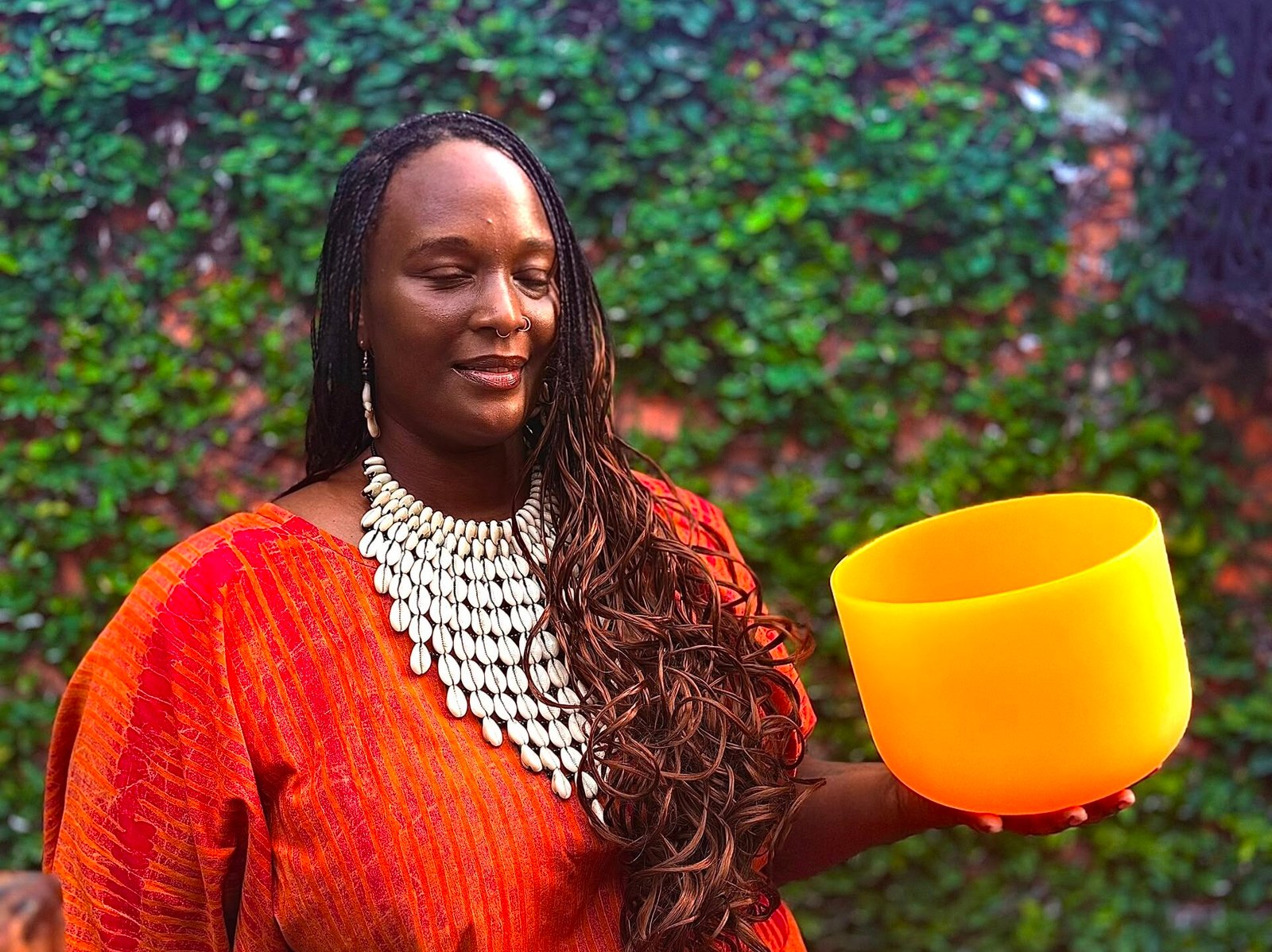
“Our bodies are made of roughly 70% water. Allow yourself to feel and let the sound vibrations pass through your bodies,” Marian says softly, as I fiddle around trying to get comfortable on my mat.
I am lying on a beach in Dar es Salaam, surrounded by singing bowls carefully arranged in front of us. The wind is blowing, the waves are breaking a few metres away, and soft music is playing in the background as Marian leads the group through breathing and meditation.
This is my first sound healing session, so naturally, my body is lying still while my brain is busy compiling a shopping list.
What am I having for dinner? Should I order takeaway?
Marian’s instruction is simple: “Notice the thoughts, and let them pass. Continue with your breathing. The more you do it, the more you build the muscle and allow the frequencies to tune you in.”
I arrived without expectations. I wanted to know what it actually felt like rather than deciding beforehand whether sound healing was going to be my thing.
For the next hour, I listened to the bowls, the waves and, occasionally, the surprisingly loud commentary happening inside my own head.
At the end, I felt lighter. My thoughts seemed calmer. Whether it was the sound, the meditation, or simply being on the beach, something had shifted.
I released. I let go.
This is just one of Marian’s sessions in Dar es Salaam. But her journey into sound healing began long before she found herself arranging singing bowls on a Tanzanian beach.
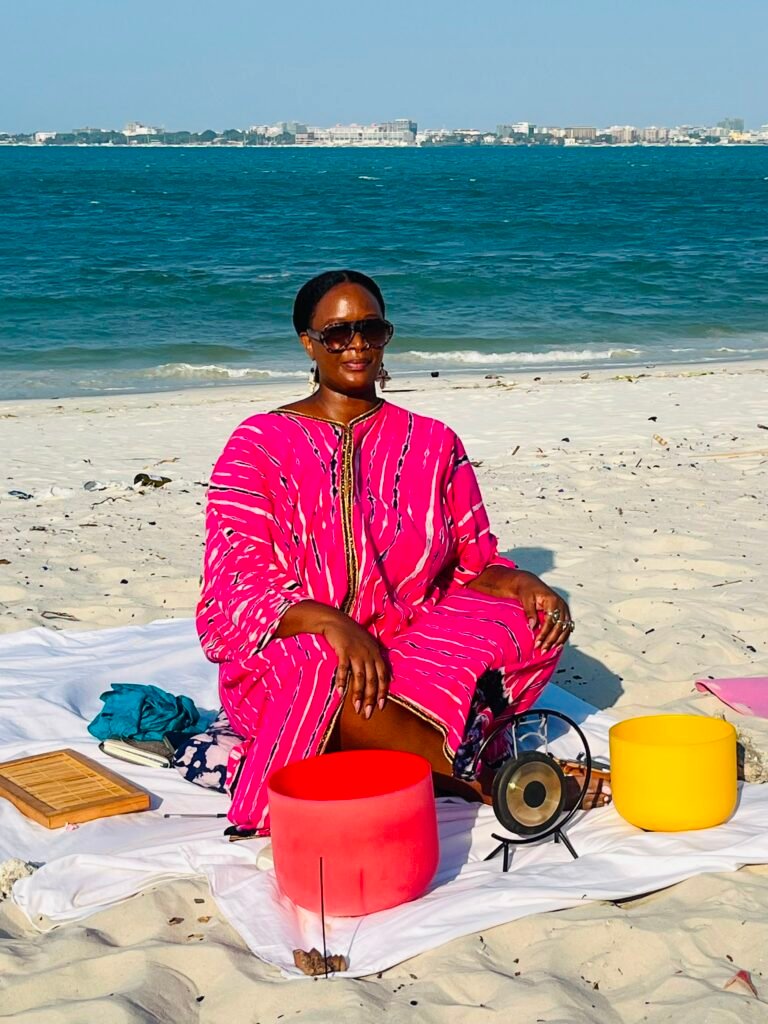
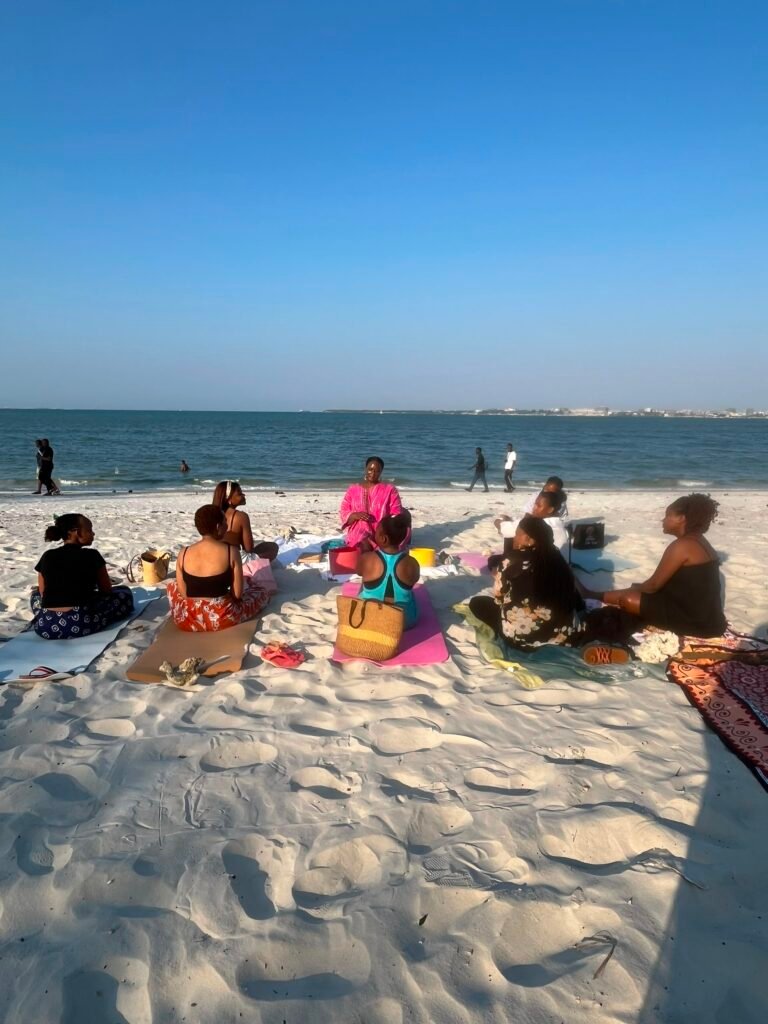
From the US to Mexico to India, and eventually to Dar es Salaam
An American who now calls Tanzania home and founder of Sound and Workshops, Marian, traces the beginning of her spiritual journey to a 2018 trip to Mexico with her girlfriend. On the journey home, she says, something felt different. She began asking herself what was wrong and whether it was time to change something about her life.
That search eventually led her to Vipassana meditation. She had been looking for stillness and, after discovering the practice and its roots in India, packed her bags and went.
The trip was supposed to last three weeks. It lasted three months.
“This was my first international solo trip,” Marian says.
The idea was to spend time in silence, but there was a slightly bigger question lurking underneath: “How did I end up in India meditating for 10 hours in silence?”
She did not make it all the way through the practice. But the experience introduced her to something else: sound meditation.
And somewhere in Kerala, in southern India, came what she describes as her AHA! Moment (in Oprah’s voice).
She had been thinking about travelling west when she met a Tanzanian woman.
“We kept in touch,” she says.
Then came 2020, when much of the world was shutting down. Tanzania remained open to international travellers, and suddenly the country was on Marian’s radar.
“I researched, and I truly liked what I saw. I sold my stuff, took a flight to Tanzania and, as they say, the rest is history.”
There was another important decision to make: where in Tanzania?
Arusha? Zanzibar?
Neither.
“Why Dar es Salaam and not Arusha or Zanzibar? I need the energy of the city,” she explains with a smile.
Marian is, by her own admission, a city girl.
And Dar es Salaam, with its traffic, noise, humidity, ocean, restaurants, people and general refusal to sit quietly, may seem like an unlikely place to pursue stillness. Marian came with a different view.
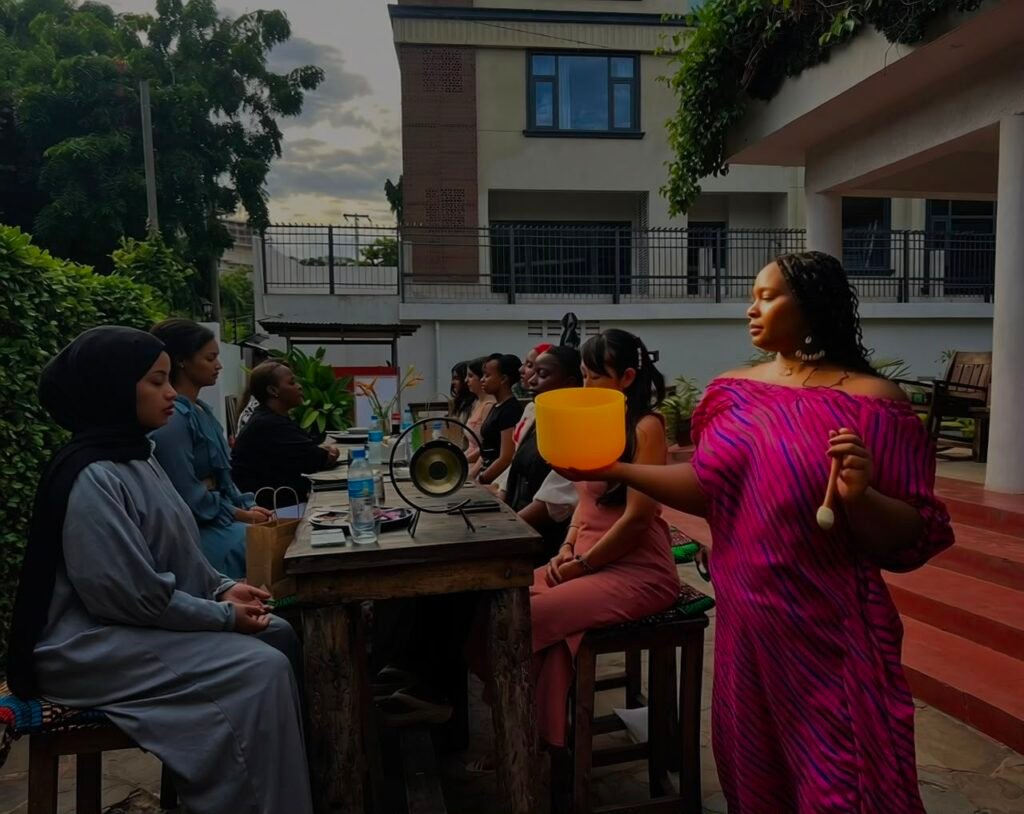
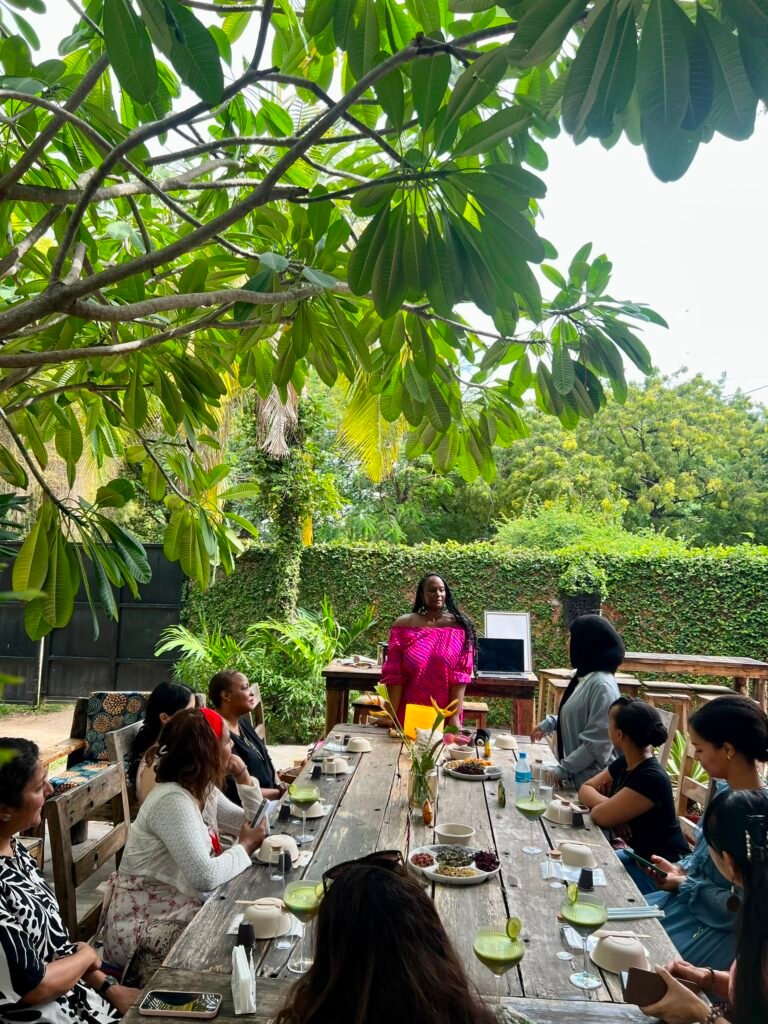
Finding her sound in Dar es Salaam
After arriving in Tanzania, Marian began exploring sound meditation more seriously, initially offering private sessions before eventually organising her first sound meditation retreat.
The early retreats came with a familiar challenge for anyone building a wellness business in Tanzania: pricing.
As a foreigner, she says, venues and other operating costs could make retreats expensive to organise, leaving little room for profit. The experience forced her to rethink how she approached the business.
Eventually, she found a model that worked. Her first successful retreat became a turning point.
“That’s when I realised I was meant to do this,” she excitedly says.
Today, her experiences go beyond the traditional sound bath. Her offerings include sound meditation with affirmation, Reiki and energy-work practices, as well as workshops that combine sound with hands-on creative activities.
Participants might make jewellery, body scrubs, herbal teas, flowers or incense. The idea is to leave everyone with something that they can continue to support their own practice after the session has ended.
There is also a difference between a straightforward sound bath and a more immersive experience. Marian explains that participants can work with up to three sound bowls in a basic session, while seven bowls can create a more immersive experience.
Science around sound-based meditation is still developing. Some research suggests possible short-term benefits for stress and anxiety, but larger and more rigorous studies are still needed. For now, sound healing is best understood as a complementary wellness practice rather than a medical treatment.
Wellness is bigger than a massage
What interests me most about Marian’s work, however, is not the sound bowls.
It is the conversation around what wellness actually means.
“Wellness for me is about your wellbeing,” she says. “It’s not just about nutrition, meditation and fitness. It’s also about your financial wellbeing, your relationships, your work, whether you are connected to your passions and hobbies. All of that is wellness to me.”
In other words, wellness is not simply what happens when you book a massage after a stressful week. It is the whole picture.
That distinction matters for Tanzania, particularly as travellers increasingly look for experiences that contribute to their wellbeing rather than simply filling a holiday itinerary.
A traveller does not necessarily need to fly into a country specifically for a wellness retreat. They might come for a safari, spend a few days in Dar es Salaam, take a sound meditation session, eat locally sourced food, book a massage, spend time by the ocean or join a creative workshop.
Wellness can become part of the journey rather than the entire reason for it.
And there is room for growth. The Global Wellness Institute estimates that global wellness tourism expenditure reached US$894 billion in 2024.
Marian sees the potential locally, although she describes Tanzania’s wellness market as still niche.
“There’s interest, but the uptake is a bit slow. Wellness is a niche market in Tanzania. But I’ve seen it growing. Now I’m seeing more wellness spaces pop up, so that shows a positive trend.”
She believes Dar es Salaam could eventually become a wellness hub.
“I do think Dar in particular could potentially become a mecca for wellness. I can already see the signs, with so many beautiful spaces opening at the moment, and I think that it can be a hub for it.”
There is a certain irony in imagining Dar as a wellness destination. This is a city where traffic can test your spiritual development before you have even reached your yoga class.
But perhaps wellness does not require silence. Perhaps it requires learning how to find stillness while everything around you keeps moving.
That idea stayed with me after the sound bath.
Marian talks about the connection between what happens inside us and what happens in nature, the idea that we are often disconnected from that rhythm.
I thought about it while lying on the beach, listening to the waves and trying, unsuccessfully, to regulate my breathing. My mind wandered… A lot!
But for once, I did not have to fix it. I simply noticed it and came back to the sound.
Would I do it again? Absolutely.
We spend so much of our lives plugged into phones, screens, work and notifications that deliberately doing nothing can feel almost rebellious. Travel has an opportunity here too.
For Tanzania, that could mean looking beyond the traditional safari-and-beach formula and asking a different question: what does it feel like to leave Tanzania feeling better than when you arrived?
Maybe the answer is a sound and beach session curated by Marian. Maybe it is a creative workshop, a massage or simply an hour without your phone.
Or, if you are anything like me, perhaps it is all of those things, plus finally telling the duck in your head to take the afternoon off.