Exploring Dodoma: A Solo Traveller’s Guide to Tanzania’s Capital
SGR left me… Let’s start from the beginning… After spending a few days in Morogoro, it was time to head to Dodoma, completing my SGR tour, which I was ridiculously excited about. Well… I overslept. The train left without me. And just like that, my smooth, organised travel plans disappeared into the sunrise. Luckily, Morogoro…

SGR left me…
Let’s start from the beginning…
After spending a few days in Morogoro, it was time to head to Dodoma, completing my SGR tour, which I was ridiculously excited about.
Well… I overslept.
The train left without me.
And just like that, my smooth, organised travel plans disappeared into the sunrise. Luckily, Morogoro to Dodoma is only about a four-hour drive, and there are plenty of alternatives if you miss the train and need to act like you totally had a backup plan all along.
You can grab a bus to Dodoma, or even better, carpool. It’s cheaper too, around TZS 25,000 (roughly $10). You sit awkwardly with strangers for the first hour, then suddenly you’re sharing snacks, life stories and debating Tanzanian music like old friends on a road trip.
The last time I was in Dodoma was in 2020. Yes, during the pandemic, when the city still felt like it was figuring itself out.
Now? Things are different.
New buildings, supermarkets and stadiums are popping up everywhere. Places that once felt ridiculously far suddenly seem close because transport has improved. The city feels like it’s growing into itself.
I arrived in the evening with absolutely no plans and nowhere to stay. Let’s just say I delayed booking accommodation for far too long… cue dramatic eye roll. On top of that, I had a semi-work deadline hanging over my head before I could properly begin my adventures.
So naturally, I searched for the nearest café with decent Wi-Fi and good coffee. Thank God for Kahawa Café at Shoppers Plaza. Familiar, calm, and exactly what I needed.
Even without a plan, Dodoma has plenty of accommodation options, from budget lodges to high-end hotels. A quick Google search around your location will give you more options than you expect.
A quick tip: always choose hotels or lodges with a healthy mix of old and recent reviews. It’s one of the easiest ways to gauge consistency and safety.
After checking in, showering and changing, it was finally time to explore Dodoma’s nightlife and honestly… I was surprised.
The city is slowly becoming known for its buzzing nightlife scene. For dancing, drinks and good food, Rainbow is popular for its lively atmosphere. Other well-known spots include Bambalaga, Capital and Waswa Bar.
One of my favourite ways to understand a destination is through a city tour. It helps me smell, feel, touch and understand the rhythm of a place and its people a little better.
“Dodoma is a strange city. When it rains, it’s lush and has the most breathtaking landscapes, but during the dry season, it’s equally dry and dusty,” a local told me.
And honestly, that description couldn’t be more accurate.
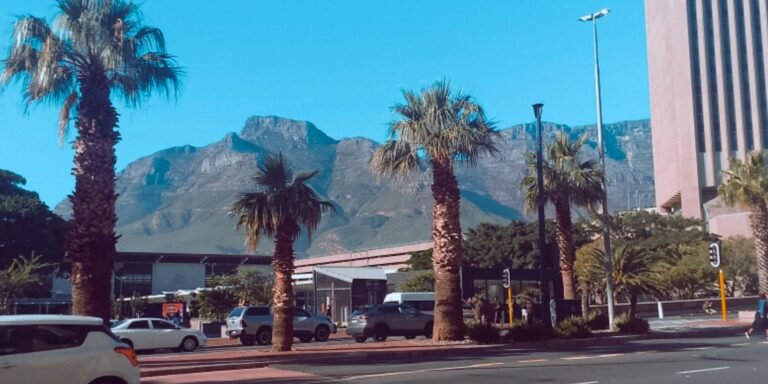
This time of year, Dodoma is beautifully green. Massive rocks rise dramatically from the landscape as though they were carefully sculpted and placed there on purpose. The rolling hills and countryside almost make you forget the city’s dry-season reputation.
This curious, two-faced city is Tanzania’s capital, located about 450 kilometres west of Dar es Salaam and nearly 440 kilometres south of Arusha.
Unlike Dar es Salaam, Tanzania’s commercial hub, or Arusha, the heart of safari tourism, Dodoma has its own quiet charm.
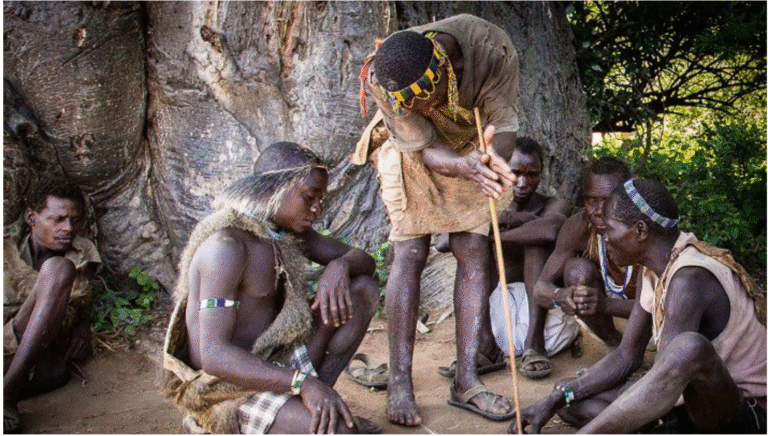
Its people are warm and eager to tell you stories about Idodomya, said to mean “it has sunk” in Gogo, and how the city eventually became known as Dodoma. A city tour introduces you to its history, heritage and quirks. You’ll see Parliament buildings, learn about the city’s religious history, visit one of the largest mosques in Dodoma, and of course, stop for photos at Nyerere Square, home to the monument of Tanzania’s founding father, Julius Nyerere.
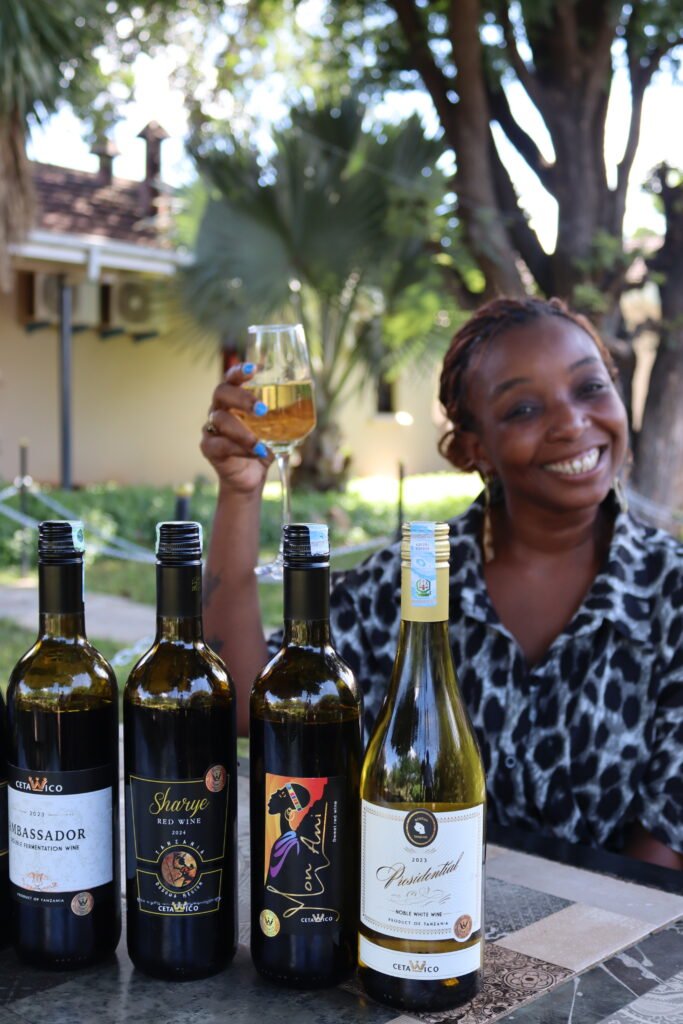

But if I’m being completely honest, the main reason I returned to Dodoma was the wine scene.
Dodoma is Tanzania’s wine region.
No, Tanzania is not competing with the wine giants of Africa just yet, but wine production here has grown significantly over the years.
“Wine has been in Tanzania for 100 years since its introduction,” explains Frank Kato, Wine Cellar representative at Alko Vintages. “Wine is growing steadily. Competition is not yet there because we are still infants in the industry. The most we can produce is 10 to 15 million litres annually, so you can’t compare us to giant exporters like South Africa.”
Two major grape varieties are grown in the region: Chenin Blanc for white wines and Makutupora, a grape unique to the region and commonly used for reds.
With growing interest in Tanzanian wine, travellers can now enjoy structured wine tours and tastings at places like Domiya Estate and Alko Vintages.
At Domiya Estate, you can spend a few hours touring the vineyard, enjoying storytelling-led wine tastings and food pairings in a peaceful setting. The vineyard also functions as a research farm, meaning you’ll come across a wider variety of grapes, including Pinot Noir, Shiraz and Chardonnay.
At Alko Vintages, the experience leans more into the history of wine in Tanzania, the production process and winemaking itself, before ending with a tasting session. Just note that winery tours at Alko Vintages are currently by appointment.
If you prefer a less structured experience, local guides can also arrange vineyard tours around Hombolo, known for its smaller local winemakers, and Matumbulu, a village famous for grape farming.
Top tip: if you don’t drink alcohol, you can still request a non-alcoholic tasting experience.
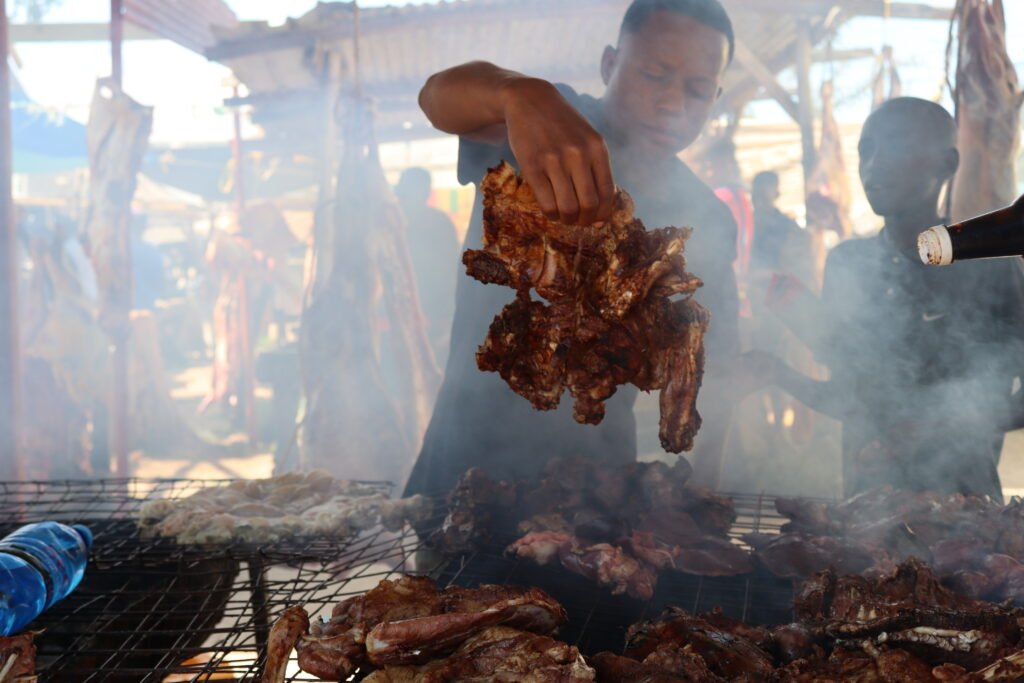
Now listen… You cannot have wine without nyama choma.
You’ll constantly hear locals rave about Mnadani, which loosely translates to “auction place”. Before you even arrive properly, the smell of grilled meat and smoky sauces hits you immediately. Then come the sounds; vendors loudly calling you over, each convinced they have the best meat in Dodoma.
I’ll be honest though, Mnadani is not for everyone.
If hanging raw meat and limited seating make you uncomfortable, this might not be your scene. But for anyone looking for authentic cultural immersion, it’s worth experiencing at least once. Besides, after the first bite of tender, smoky nyama choma, you’ll care a lot less about the surroundings.
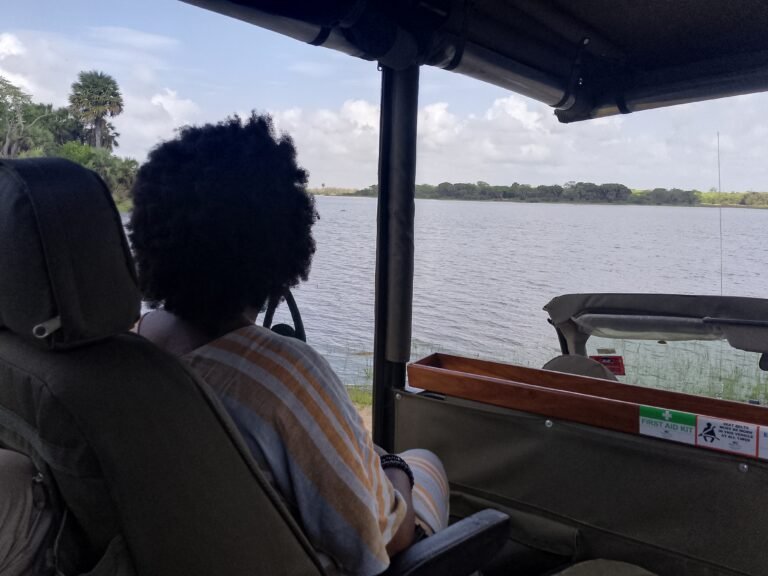
And if you still crave a safari after all the wine and meat, you can easily do a day trip to Swaga Swaga Game Reserve, located about two hours from the city.
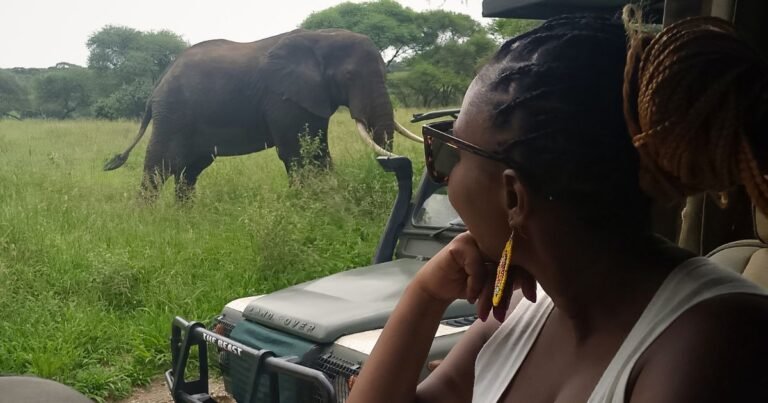
For a more immersive safari experience, Dodoma also works as a gateway to Tarangire National Park and Ruaha National Park, one of the largest national parks in Africa after Nyerere National Park. Both are roughly four hours away, making them perfect for a quieter overnight safari away from the usual crowds.
I genuinely had one of my best solo travel experiences in Dodoma.
It’s not flashy. It doesn’t scream luxury or glamour. But the people, the stories, the history, the food and the wine slowly grow on you before you even realise it.
So yes, an SGR trip from Dar es Salaam might just give you one of the most unexpectedly immersive weekends in Tanzania.